
Breaking the Silence, One Conversation at a Time
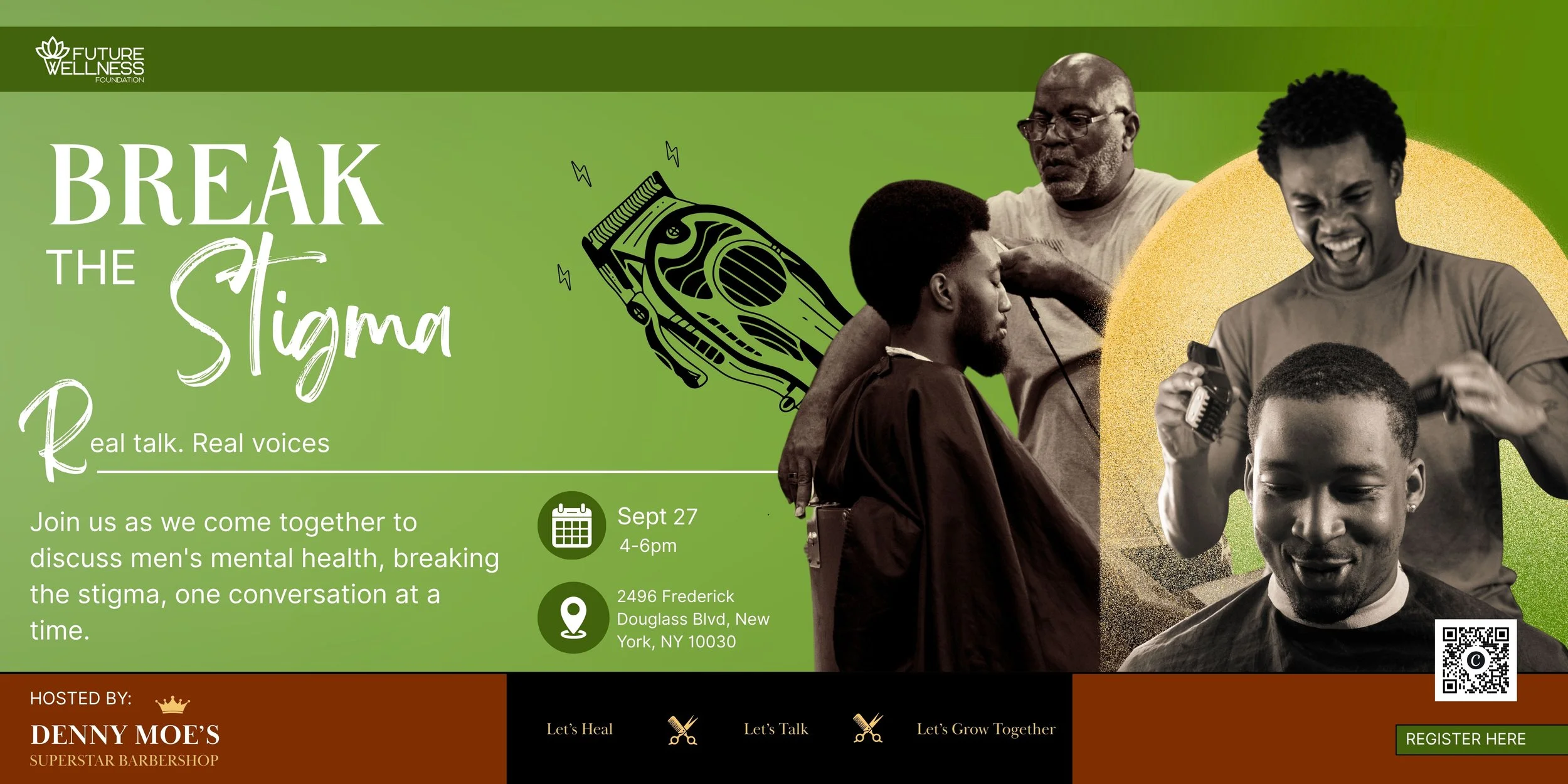
When was the last time you sat down and had a genuine conversation with someone? That someone might be a friend, a stranger, or even your own barber.
There is something different about the chair at a barbershop. It is one of the few places where men and boys, especially Black men and boys, can sit still for thirty minutes to an hour, look someone in the eye, and talk. No agenda. No appointment reminders buzzing on a phone. Just conversation, the kind that unfolds naturally between the buzz of clippers and the low hum of a television in the corner.
At the Future Wellness Foundation, we believe these familiar community spaces can play a crucial role in conversations about mental wellness. Healing does not always have to happen in a clinical office under fluorescent lights. Sometimes it happens in the chair you have been sitting in since you were seven years old, across from a barber who has watched you grow up.
That is why created Barbershop Talk was created: a community-centered space where Black men and boys can come together to discuss mental wellness without shame or stigma. It is one expression of our broader mission as a foundation, expanding access to wellness, healing, and community support for people who have historically been left out of the conversation.
The Weight Men Carry Alone
Most men and boys feel pressured to carry stress, grief, anxiety, and other challenges alone. From a young age, many are taught, sometimes directly and sometimes through silence, that vulnerability is weakness. "Man up." "Shake it off." "Be strong for your family." These phrases are so common that most of us do not even notice we are repeating them, but their cumulative effect is enormous. Boys grow into men who have never been given the language to describe what they are feeling, let alone the permission to feel it in the first place.
For many Black and BIPOC (Black, Indigenous, and People of Color) men and boys, this burden is even heavier. Cultural expectations and stigma surrounding mental health can make it even harder to speak openly or seek support. Generations of systemic barriers, from unequal access to healthcare, to a justified historical distrust of institutions, to the ever-present pressure to appear strong in the face of adversity, have combined to create an environment where silence often feels safer than honesty.
The statistics tell part of the story. Black men are significantly less likely than their peers to seek professional mental health support, even when facing comparable or greater levels of stress, trauma, and grief. But statistics alone cannot capture what this silence costs: strained relationships, unprocessed grief, chronic stress that shows up in the body as high blood pressure or heart disease, and in the most tragic cases, lives lost to despair that no one saw coming because no one ever asked, and no one ever said.
We started the Barbershop Talk Program because we believe this cycle can be broken. Not through lectures. Not through pamphlets left untouched on a waiting room table. But through honest, unhurried conversation in a place where men already feel like they belong.
Why the Barbershop?
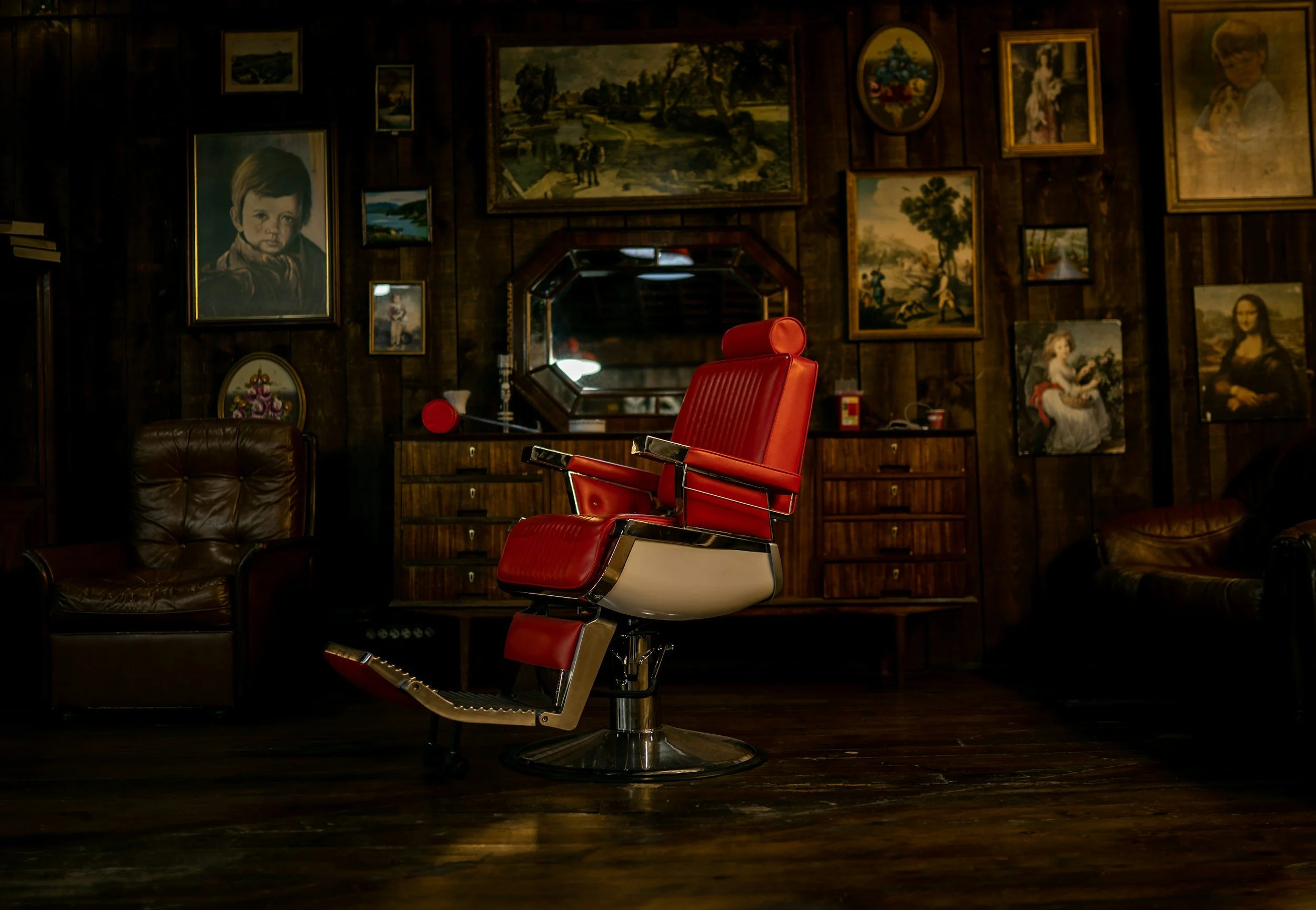
There is a reason the barbershop has always been more than a business. For generations, it has served as a town hall, a classroom, a therapist's office, and a second home, all rolled into one small storefront. It is where opinions are debated, where advice is passed down from older men to younger ones, where laughter and hard truths sit comfortably side by side.
This tradition did not happen by accident. During some of the most difficult chapters in our history, the barbershop was one of the few spaces where Black men could gather freely, speak openly, and organize without fear. It became sanctuary. Not just for a haircut, but for healing, for community, for identity.
The Barbershop Talk Program is built on that same foundation. We are not asking men to walk into an unfamiliar clinical setting and open up to a stranger in a white coat. We are meeting them exactly where they already are, in the chair, with people they already trust, having the kind of conversation that has always happened there, just given intention and structure.
Our trained facilitators work directly with barbershop owners and barbers, many of whom already serve as informal counselors to their clients whether they realize it or not, to create a space where mental wellness topics can surface naturally. Sometimes that looks like a guided discussion during a slow afternoon. Sometimes it is a scheduled Barbershop Talk event with speakers, resources, and open floor conversation. Sometimes it is as simple as a barber who has been trained to recognize when a client needs more than a fresh fade, and knows how to gently point them toward support.
Barbershop Talk sits at the intersection of the three pillars that guide everything we do as a foundation: access, education, and empowerment. We connect participants to real mental health resources, not just conversation for its own sake. We bring education into a space where it does not feel like a lecture. And we empower the barbers themselves, community leaders in their own right, to carry this work forward long after our facilitators leave the room.
What Happens in a Barbershop Talk
Every Barbershop Talk session is different because every shop and every community is different, but there are threads that run through all of them.
Real talk, no judgment. We do not walk in with a script that tells men how they should feel. Instead, our facilitators create an environment where honesty is welcomed, where a man can say "I have not been okay" without bracing for a dismissive response.
Peer connection. There is a particular kind of relief that comes from realizing you are not the only one struggling. When a father in his fifties hears a twenty-two-year-old share a similar experience with anxiety, or when a teenager hears a grown man admit he still deals with grief from losing a parent, something shifts. The isolation starts to lift.
Practical resources. Conversation is powerful, but it is only the first step. Our program connects participants with mental health resources, including culturally competent therapists, community support groups, and educational materials, so that the conversation in the chair can become a bridge to ongoing care if that is what someone needs.
Consistency. Healing is not a one-time event. That is why Barbershop Talk is not a single visit or a one-off event. We return to the same shops, build relationships with the same barbers and clients over time, and let trust deepen the way it always has in these spaces, gradually, through repetition and reliability.
The topics that come up in a Barbershop Talk session mirror the same skills we bring to all of our community wellness workshops: emotional awareness and self-regulation, stress management and coping strategies, healthy communication, and building the kind of confidence and resilience that carries a man through hard seasons rather than around them. The difference is the setting. These are not skills taught from a slide deck. They are skills modeled in real time, in a real conversation, in a chair that has held generations of men before this one.
Three States and Counting
We have already served individuals across three states, and every one of those communities has taught us something new about what this work requires. We have learned that no two shops are the same, and no two conversations are the same, but the need is universal. Wherever we go, men are hungry for a space where they can put the weight down, even for an hour.
In 2026, we are expanding to reach even more of our community, and Harlem is the next stop in that movement. Harlem carries a legacy of resilience, culture, and community strength that makes it a natural home for this work. The barbershops that line its streets are already woven into the fabric of daily life there, serving generations of families who have relied on them for far more than haircuts. We are honored to bring the Barbershop Talk Program into that legacy, and we are approaching this expansion with humility, listening first to the barbers and community members who know the neighborhood best before we ever set an agenda.
Expanding into a new community is not simply about opening more locations. It is about building genuine relationships with barbershop owners who have spent years earning the trust of their clients. It is about training barbers who are already natural listeners to become intentional facilitators of wellness conversations. It is about ensuring that the resources we bring are relevant, accessible, and actually useful to the people we serve. This kind of expansion takes time, and we are committed to doing it right rather than doing it fast.
Why This Matters Now
Investing in men's mental wellness is one of the most powerful things we can do for ourselves, our families, and our communities. When a man learns to name what he is feeling instead of burying it, that shift does not stay contained to him alone. It ripples outward. A father who processes his stress in a healthy way shows up differently for his children. A husband who has language for his grief communicates differently with his partner. A young man who sees older men in his community speak openly about their struggles grows up believing that vulnerability and strength are not opposites.
This is bigger than one conversation. It is about reviving a tradition that has held our communities together through every social disruption: the barbershop as sanctuary, not just for a haircut, but for healing. It is about ensuring that the next generation of Black men and boys inherits a different relationship with their own emotions than the one so many of us were handed. It is about proving, one shop, one chair, one honest conversation at a time, that silence is not the only option.
We know this work is not something any single organization can do alone. It requires barbers willing to be trained. It requires community members willing to show up and be honest, even when honesty feels uncomfortable. It requires partners, donors, and volunteers who believe, as we do, that mental wellness is not a luxury reserved for those who can afford a therapist's hourly rate, but a basic human need that deserves to be met wherever people already gather.
Part of a Larger Body of Work
Barbershop Talk did not appear in isolation. It grew out of Future Wellness Foundation's ongoing series of community wellness workshops and roundtable discussions, spaces like Let's Talk About Stigma, an open dialogue built around breaking mental health stigma, and Boundaries & Emotional Wellness, which helps participants set healthier limits and manage stress in their relationships. Each of these programs approaches the same core belief from a different angle: that emotional well-being is not a luxury, and that the right setting can make an enormous difference in whether people feel safe enough to engage with it at all.
We have seen this same principle at work in gatherings like The Soft Check-In, an intimate space we created for BIPOC women, femmes, and non-binary caregivers to pause, breathe, and reconnect through breathwork and reflection rather than performance. Different audience, different format, same underlying conviction: people open up when the space respects their pace, their culture, and their comfort. Barbershop Talk simply applies that conviction to a setting where Black men and boys have always felt at home.
None of this happens overnight, and none of it happens through force. It happens because we take the time to build trust first, program second. It happens because the people delivering these conversations are not outsiders parachuting in with a clipboard, but barbers, community leaders, and mental health professionals who reflect the very communities they serve.
Looking Ahead
Harlem is not the final stop. It is the next chapter in a much longer story we are committed to writing alongside the communities who need it most. As we grow, our approach will not change: listen first, build trust, train barbers as partners rather than employees of a program, and let every new location shape itself around the specific culture and needs of that neighborhood.
We are also working to expand the wraparound resources available through the program, deepening our partnerships with culturally competent therapists, expanding access to support groups, and developing educational materials specifically designed for men who may be encountering mental health language for the very first time. Our goal is not simply to start conversations, but to make sure those conversations have somewhere meaningful to go.
Be Part of the Movement
We invite you to be part of this movement to revive the traditions that have held our communities together through every social upheaval. Whether you are a barbershop owner interested in hosting a Barbershop Talk session, a mental health professional who wants to volunteer your expertise, a community member who wants to attend, or a supporter who wants to help us fund this expansion into Harlem and beyond, there is a place for you in this work.
Change does not always announce itself with grand gestures. Sometimes it starts quietly, in a barber's chair, with someone finally saying out loud what they have been carrying alone for far too long. Sometimes it starts with a simple question: "How are you, really?" and someone finally answering honestly.
But honest conversations can make a difference. They always have. They always will.
Join us as we bring the Barbershop Talk Program to Harlem in 2026, and help us build a future where no man or boy in our community has to carry his silence alone.